Dog Acre
Dog Acre was originally a strip of land
now occupied by the western half of Alpha Road, with a small frontage butting
onto Station Road. It belonged to the
Church of All Saints and had been given to the Church by a local donor,
probably in 16th century. It
was certainly a well-established piece of Church land by 1622.
During the Medieval and Tudor periods almost every householder owned a dog and there would always
be a few stray ones around the villages and towns. If there was any trouble with the dogs
fighting each other or attacking people, the local ‘Dog Whipper’ would be
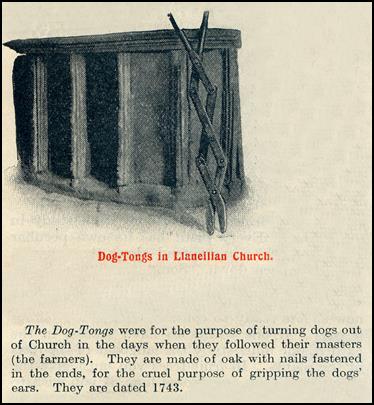
called to grab the offending animal around its neck with a large pair of wooden
tongs, not unlike those that were used to lift washing from the boiler. Some communities still own their old wooden
tongs.
The Dog Whipper was paid, sometimes in cash, sometimes in kind and in Birchington’s case, by the use of about an acre of land or by a combination of these. He could cultivate this land, or use it for grazing an animal or even let it out to earn himself hard cash. The Dog Whipper first appears in the Church accounts in 1622.
1622 ‘Old Hayward’ was the Dog Whipper – plus 8s.
1628 ‘Old Posier’ took
over the job until 1843 – still with the additional 8s.
1685
John Taylor – Dog Whipper – 1 accer of land.
1687 ‘John Taylor – Dog Whipper, for his said
office have 1 accer of the said land.’
1694 ‘On accer now lett out Thomas Penney Dogg Whiper. Abutting
to the Butt Acer.’ (The Butts
were where men of the village practiced archery every week in Medieval and
early Tudor times)
In
1811, at the Easter Vestry, it was agreed that ‘James Knott walk round the
Church twice every Sunday during service to keep good order and to be paid by
the Churchwardens 6d every Sunday.’ This
continued until 1828, when Dog Acre was granted to the Parish Clerk instead, in lieu of
payment.
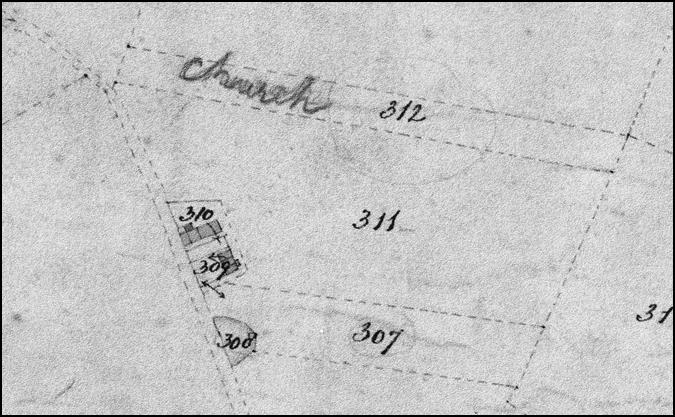
In the 1840 Tithe Map, Dog Acre is
listed as containing 3 rods 31 perches (ie. only 9
perches short of an acre)
The land is listed on the 1872 Ordnance
Survey map as ‘Dog Acre’, plot 54. In
about 1880, it was decided to build the first new road in Birchington, running
parallel with the south side of the railway line. The Church was asked to sell the main part of
this piece, leaving just the triangle near the station in Church hands. “Beaconsfield” was, and for some time
remained, the only house in the road, which ran from Station Road corner to the
top of Albion Road, then known as Wilson’s Road or Coleman Stairs Road. There is a photo of this last triangle of
land with fencing and gates on it, indicating that it was being used for
grazing land at this date.
In May 1905, the church Magazine states that Dog
Acre could now be sold if the vicar and Churchwardens so desired - presumably
this was just the triangle at the western end of the old acre, because the main
section had already been handed over to Parish Council in about 1880 to make
the western end of Alpha Road. Nothing
was done with the triangle at that time, however.
In 1921 the Parish Council asked for the
church to sell its last remaining corner, which it eventually did, once the
Charity Commissioners had agreed, for £390 and the proceeds were invested in
War Stock, clearly documented in the Church accounts.
In June 1975 Birchington Residents’
Association won a fight to stop Thanet Planning Committee from granting
permission for the building of a new Post Office on the site. It is said to have been purchased for £74,000
(see above paragraph!) as an open space.
A petition containing 1,200 signatures was presented and the decision to
reject the planning request was unanimous.
In November and December of the same year a footpath was laid across Dog
Acre. Birchington’s Chamber of Commerce
and Thanet Council shared the cost between them. Its latest newsworthy event is the addition
of a new lamp, installed, but not yet functioning, in April 2004!
Jennie Burgess - 2009
Dog Acre in 1840